
Understanding Lube Oil Production Setup: Insights into Blending Plants

The manufacturing of lubricants is a complex process that requires precision, technical expertise, and specialized equipment. Among the critical components of this industry is the lube oil production setup, which encompasses various stages from base oil preparation to the final packaging of finished products. This article aims to provide a comprehensive understanding of the essential elements involved in the production of lubricants, with a particular focus on the blending process. The blending stage is pivotal in ensuring the quality and performance of the final lubricant products.
Key Components of a Lube Oil Production Setup
A typical lube oil production setup consists of several integrated units designed to handle different phases of lubricant manufacturing. These include base oil storage, additive dosing systems, blending tanks, filtration units, and packaging lines. Each component plays a vital role in maintaining product consistency and meeting industry standards.
Base Oil Storage and Handling: Base oils are the primary raw materials for lubricant production. Proper storage facilities equipped with temperature control and contamination prevention mechanisms are essential.
Additive Dosing Systems: Additives enhance the properties of base oils, such as viscosity, oxidation resistance, and anti-wear characteristics. Automated dosing systems ensure precise additive quantities.
Blending Tanks: These tanks facilitate the thorough mixing of base oils and additives. Agitators and temperature control systems are commonly integrated to achieve uniform blends.
Filtration Units: Filtration removes impurities and ensures the clarity and stability of the lubricant.
Packaging Lines: Final products are filled into containers of various sizes, labeled, and prepared for distribution.
The efficiency of a lube oil production setup depends on the seamless integration of these components, supported by robust process control and quality assurance protocols.

Understanding the Lube Oil Production Setup Process
The production process begins with the selection and preparation of base oils. These oils are typically refined mineral oils or synthetic oils, chosen based on the desired lubricant specifications. The base oils are transferred to blending tanks where additives are introduced according to precise formulations.
The blending process involves several critical steps:
Pre-blending: Base oils are mixed to achieve the required viscosity grade.
Additive Incorporation: Additives are added in controlled amounts to enhance performance characteristics.
Homogenization: The mixture is agitated to ensure uniform distribution of additives.
Quality Testing: Samples are taken for laboratory analysis to verify compliance with specifications.
Filtration: The blended oil is filtered to remove any particulate matter.
Storage and Packaging: The finished lubricant is stored in tanks before being packaged.
Automation and process control systems are often employed to optimize blending accuracy and reduce human error. The use of programmable logic controllers (PLCs) and real-time monitoring enhances operational efficiency.

What is a 4T Oil Blending Plant?
A 4T oil blending plant is a specialized facility designed for the production of four-stroke engine oils. These oils are formulated to meet the lubrication requirements of four-stroke engines commonly found in motorcycles, scooters, and small vehicles. The 4T oil blending plant incorporates equipment and processes tailored to produce oils with specific viscosity grades and additive packages suitable for engine protection, fuel efficiency, and emission control.
Key features of a 4T oil blending plant include:
Precision Additive Dosing: To meet stringent engine oil standards.
Temperature-Controlled Blending: Ensures stability and performance of the oil.
Quality Assurance Laboratories: For testing viscosity, flash point, and other critical parameters.
Flexible Packaging Options: To cater to various market demands.
The plant is designed to operate with high throughput while maintaining product quality, making it an essential asset for businesses targeting the automotive lubricant market.
Technical Considerations for Setting Up a Lube Oil Blending Plant
When establishing a lube oil blending plant, several technical factors must be considered to ensure operational success and compliance with industry standards.
Capacity Planning: Determining the production volume based on market demand and scalability.
Equipment Selection: Choosing blending tanks, dosing systems, and filtration units that meet capacity and quality requirements.
Process Automation: Implementing control systems for accurate additive dosing and blending consistency.
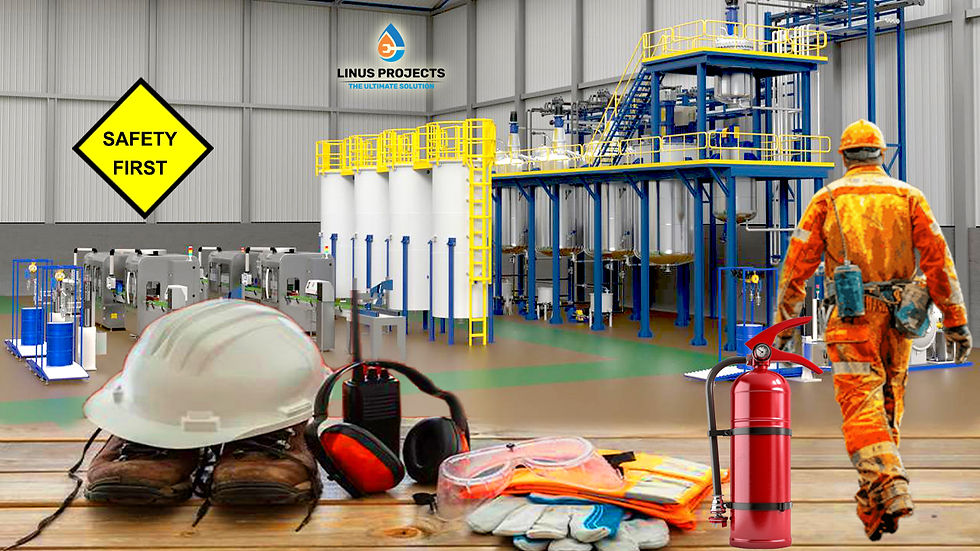
Safety Measures: Incorporating fire protection, spill containment, and ventilation systems.
Environmental Compliance: Managing waste and emissions according to regulatory guidelines.
Quality Control: Establishing laboratories equipped for chemical and physical testing of lubricants.
A well-designed plant layout optimizes material flow and minimizes cross-contamination risks. Additionally, staff training on operational procedures and safety protocols is crucial for maintaining production standards.
Enhancing Production Efficiency and Market Reach
Maximizing production efficiency involves continuous monitoring and optimization of the blending process. Implementing predictive maintenance for equipment reduces downtime, while data analytics can identify process improvements. Furthermore, adopting sustainable practices such as energy-efficient machinery and waste recycling aligns with global environmental trends.
Expanding international footprint requires adherence to global lubricant standards such as API, ACEA, and ISO. Certification and compliance facilitate market entry and build customer trust. Strategic partnerships with raw material suppliers and distributors also enhance supply chain reliability.
LINUS PROJECTS (INDIA) aims to be the go-to global leader for turnkey project management and manufacturing of lube oil blending and grease making plants, helping clients achieve maximum production efficiently and expanding their international footprint. Their expertise in delivering customized solutions supports businesses in establishing competitive manufacturing setups.
Future Trends in Lube Oil Production Setup
The lubricant industry is evolving with advancements in technology and changing market demands. Emerging trends include:
Synthetic and Bio-based Lubricants: Increasing demand for environmentally friendly products.
Smart Manufacturing: Integration of IoT and AI for real-time process optimization.
Modular Plant Designs: Allowing flexible and scalable production capacities.
Enhanced Additive Technologies: Developing additives that improve lubricant performance under extreme conditions.
Staying informed about these trends enables businesses to adapt their production setups and maintain a competitive edge.
This detailed overview of the lube oil production setup and blending plants provides practical insights for businesses seeking to establish or upgrade their lubricant manufacturing capabilities. By focusing on technical precision, quality control, and operational efficiency, companies can achieve sustainable growth and meet the evolving needs of the lubricant market.


Comments